

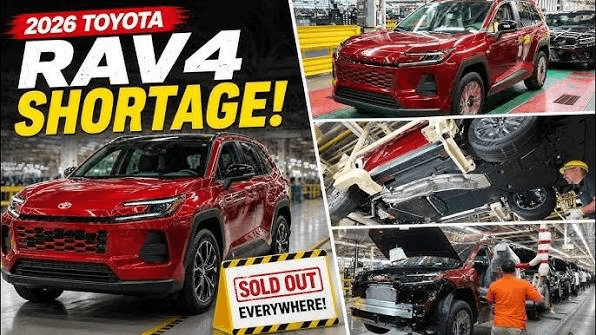
Take a good look at the car lots. Notice what’s missing? The new Toyota RAV4—especially the hybrid and plug-in hybrid—is unusually hard to find. That’s not a fluke or a dealer trick. It’s a global supply crunch, rooted in choices Toyota made and in how buyers like you have responded. If you want a RAV4, get ready for a game where patience, timing, and smart pivots matter more than ever.
What’s Happening With RAV4 Availability?
Let’s get real. If you walk into a Toyota showroom in 2026, don’t expect rows of shiny new RAV4s waiting for you. Most dealers report five days or less of inventory on hand. For hybrid models, it’s even tighter—sometimes zero. U.S. RAV4 sales are down almost 40% from last year. But here’s the twist: This isn’t because people stopped buying the RAV4. Quite the opposite. Toyota simply cannot build enough to keep up.
Waiting lists are long and growing—six to nine months for the RAV4 Hybrid or Prime isn’t rare. You’ll see empty lots, rushed sales when the trucks unload, and plenty of frustrated buyers. Dealers admit they aren’t holding back—they just don’t have the cars.
Why Is There a Toyota RAV4 Shortage?
You don’t need twenty causes. You need the truth. Three things matter most.
Model Change and Factory Retooling
Toyota’s not just tweaking the RAV4; they’re rolling out an all-new, sixth-generation model for 2026. Two big shifts: sharp new styling, and a near-total focus on hybrid and plug-in hybrid versions. That means factories in Kentucky, Ontario, and Japan had to slow down or pause to pull out old lines and install the new. Retooling isn’t quick or glamorous. You can’t “catch up” by working overtime. When plants stop, supply stops.
Toyota spaced the shutdowns to keep something flowing, but every retooling window cut deep. For months, less than half the usual number of new RAV4s have made it to North America.
Staggering Demand and No Let-Up
When you make the best-selling non-pickup in America, plan for crowds. Even as Toyota tries to pivot, buyers kept showing up—especially for the hybrids. The market wanted more RAV4s than Toyota ever planned for, flooding dealers with orders. Some trims, like the RAV4 Prime, are so in demand that there’s almost no chance you’ll stumble onto one by accident.
Hybrid and Plug-in Hybrid Production Limits
The hottest RAV4s all wear a little blue: Hybrid and Prime. Supply is microscopic. Why? Two reasons collide. First, building hybrids is more complex (think batteries, two powertrains, and strict quality checks). Second, the U.S. and Canada haven’t had full hybrid production capacity until Kentucky ramps up. No magic shortcut. If you want a hybrid, you’ll be waiting the longest. Gas-only models? Some dealers went months with none at all.
What’s Fueling This High Demand?
RAV4 is the poster child for smart, no-nonsense SUVs. Its hybrid version gets a staggering 40+ mpg and ranks near the top in reliability and resale. With higher gas prices and a shift towards electrification, buyers are flocking to hybrids like never before. Toyota can’t keep up, even as it’s making more RAV4s than almost any rival SUV.
You don’t need fancy features. You need a hybrid that actually works—that’s what RAV4 delivers. That’s why you and thousands of others are piling onto wait lists.
Why Are Hybrid and RAV4 Prime Models Impossible to Find?
If you want the regular RAV4 Hybrid, brace yourself. If you want the plug-in Prime, good luck. Toyota is scrambling to open new lines in Kentucky, but the ramp-up isn’t instant. Batteries, electronics, and supply chain headaches slow everything. Dealers are lucky to get a handful of new Primes every few months—and those are pre-sold before they arrive.
Toyota promises more hybrids as Kentucky ramps up, but even their own analysts say it’ll take a while to close the gap. The result: Hybrids and Primes are unicorns. Expect stiff competition and few discounts if you insist on one.
Production and Supply Chain Issues: The Hidden Limits
Now, add a layer of chaos. Global supply chain problems and tariffs hit automakers everywhere, but for the RAV4 the timing couldn’t be worse. Canadian output—the linchpin for North America—fell by 40% as plants retooled and wrestled with parts shortages.
Toyota and Lexus have been running lean on inventory for years. This isn’t new, but it’s supercharged now. Some industry insiders say don’t expect rapid improvement. It’s not about “catch-up.” It’s about supply chains that aren’t firing on all cylinders.
Tough Market Impacts: What You’ll See, Feel, and Pay
Expect sticker shock. Low supply means higher prices, especially on hybrids and Prime models. Forget big discounts—even MSRP looks generous. Dealers aren’t price-gouging because there’s nothing extra to sell.
Wait lists? Get on one, or you’ll get nowhere. It’s not rare to wait six to nine months. That delay alone is pushing desperate buyers to the used market, where prices for late-model used RAV4s—especially hybrids—have jumped sharply. You want a nearly-new option? So does everyone else.
Some buyers, hearing “no RAV4 for months,” pivot to other Toyota SUVs or even entirely different brands. Dealers are trained to guide you toward alternatives like the Corolla Cross, 4Runner, or Toyota’s bZ electric crossover. This keeps the brand relationship alive, but it’s no comfort if your heart is set on a RAV4.
Shortage Timeline: How Did We Get Here, and When Will It End?
Let’s be blunt: This didn’t happen overnight. Late 2025, Toyota tells dealers, “Get ready for a drought—plant shutdowns are coming.” By early 2026, it hits. Retooling shreds the supply chain, inventory falls more than 50%, and RAV4 sales drop by 40%. Dealers run out of 2025 models right after the 2026 RAV4 is revealed.
Summer 2026 comes, and the pipeline is still thin. Toyota estimates the 2026 shortage will cost them 55,000 lost RAV4 sales in the U.S. alone. Kentucky is still scaling up hybrid capacity. Customers still wait six or more months between deposit and delivery.
Most analysts and dealers predict gradual improvement as factories hit full speed, but no one expects a full glut anytime soon. Demand just won’t quit.
Advice for RAV4 Buyers: Don’t Wait for the Perfect Moment
So, you want a new RAV4? Start here: Expect limited or zero choice on dealer lots. If you’re fixed on getting a hybrid or Prime, prepare to order and wait. Six to nine months isn’t unusual. Stop hunting for big deals: Tight supply means minimal or no discounts, and sometimes upcharges for scarce trims.
Not married to the RAV4? Flexibility works for you. Toyota recommends alternatives—Corolla Cross, 4Runner, bZ electric, Highlander Hybrid. These don’t have the RAV4’s name cachet, but they’ll move you out of wait-list limbo.
Here’s a power move: Don’t obsess over new. Look for certified pre-owned RAV4s, especially hybrids. Yes, prices are high, but you might be rolling sooner. Compare used prices to the “real” cost of waiting six months for new.
If you’re an entrepreneur or professional running on clockwork, make the car earn for you. Can you Uber/Lyft part-time while you wait for your perfect ride? Or use your current vehicle to fund the gap? This is just one “low-lift, high-impact” move you can borrow from business playbooks.
You don’t need a perfect RAV4 at a perfect price. You need a solution that moves you forward.
Half the people reading this will stay on the side-lines, waiting for “the right deal.” Good. Less competition for you.
Set yourself up to win, not to wait.
Future Outlook: Will RAV4 Supply Improve?
Now the question everyone’s asking—”When will things get back to normal?” Toyota’s adding hybrid production lines. Plants in Kentucky and Ontario will regain speed. Those steps will slowly refill the supply.
But here’s reality: Demand for RAV4, and for hybrid SUVs in general, is relentless. Even with more cars coming, the glut you want probably won’t arrive until late 2026 or beyond. Inventory may remain tight all year for top trims, especially the Prime. If you want no wait, shift now to another Toyota model, or check out local used inventories.
Savvy buyers are pivoting rather than stalling. Others jump queues by buying from smaller dealers in rural areas or nearby states—even arranging delivery. Some use online marketplaces or third-party platforms that alert you when one hits a lot. Why not use an approach most car shoppers ignore?
You don’t need a herd strategy. You need decisiveness and a willingness to outwork competitors. Want more tactics for taking action? Get them at SmallBizBit—stop waiting, start moving.
Bottom Line: This Shortage Is Your Test—Act or Settle
So, maybe you’re not in love with a six-month wait. Maybe you’re not eager to pay above sticker. Good. It means you’re like most buyers—pragmatic and ready for a fast win.
Map your needs. Consider “good enough” instead of perfect. Hunt hard for the RAV4—hybrid or Prime—if it truly changes your business, commute, or family life. Otherwise, make your next pivot the smartest move you make this year.
You don’t need to wait for everything you want. You need traction. Start small. Choose what solves your problem now, not someday. That’s how you win with or without a RAV4.
Stay decisive. Stay moving. What’s your next step?
Also Read This:
